
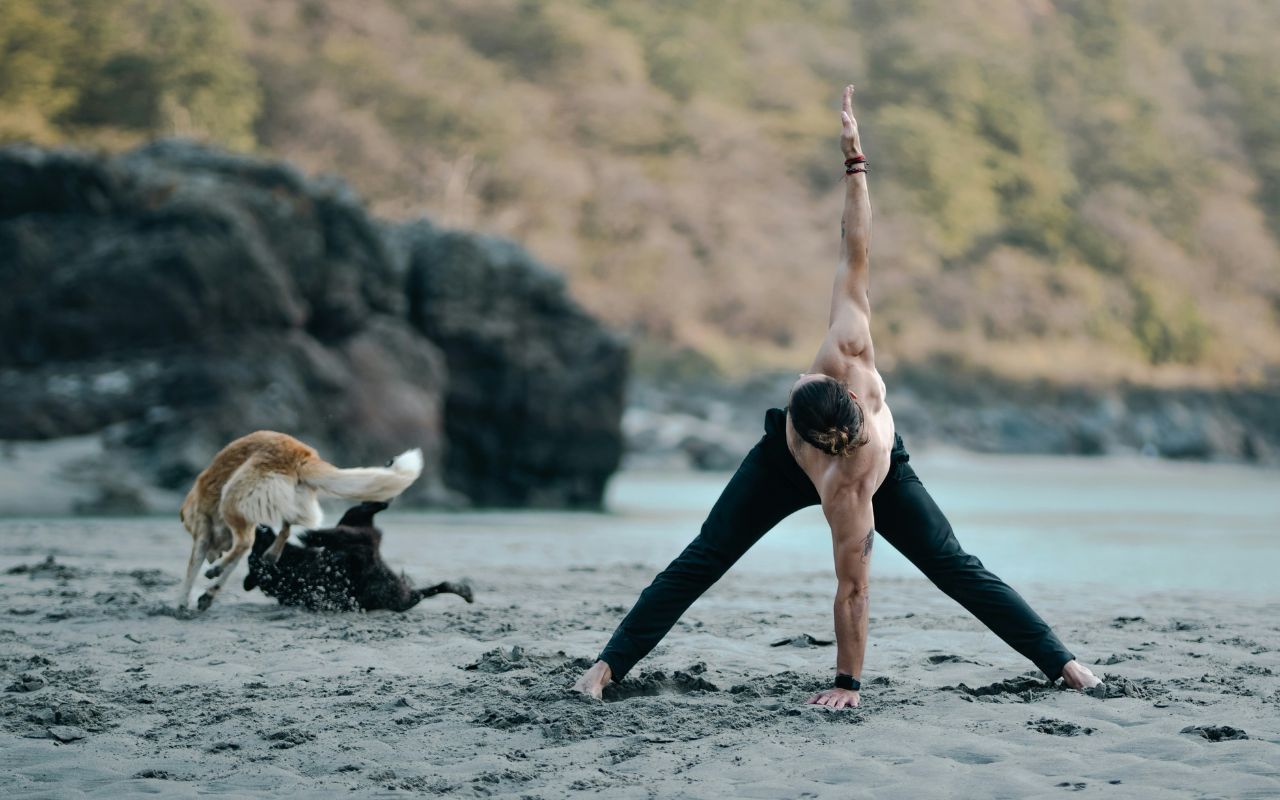
Movement vs exercise: the distinction we've lost.
There is something oddly revealing about the phrase movement vs exercise.
It's a phrase almost all of us use, yet no other species on earth would understand it. Movement has become a separate appointment in our calendars—a task to complete before returning to what we consider our real lives.
Perhaps that's why it so often feels difficult.
Not because moving is unnatural, but because separating movement from living is.
Exercise is, in many ways, an extraordinary invention. It has helped millions become stronger, healthier and more confident. But it also asks us to compress something wonderfully expansive into a single hour. We drive somewhere to move. We stand in rows. We repeat carefully selected actions. Then we return to sitting for the rest of the day, satisfied that we've done enough.
The body rarely sees it that way.
It doesn't care whether movement comes neatly packaged between six and seven in the evening. It responds to variety, frequency and spontaneity. A flight of stairs taken two at a time. Squatting to pick something up rather than bending from the waist. Walking because the weather is too beautiful to ignore. Reaching, carrying, climbing, balancing, stretching without thinking about any of it.
These moments seem insignificant on their own. Together, they form a life that feels physical.
Maybe that's the real movement vs exercise distinction we've lost.
Movement isn't just something that improves health. It changes how we experience a day. A body that moves regularly tends to feel more awake to the world around it. There is a quiet confidence in knowing you can walk further than expected, sit comfortably on the ground, lift a heavy bag without hesitation or scramble over a fallen tree simply because it's there.
Capability has a way of making life feel larger.
Perhaps that's why the most memorable days are rarely the ones spent completing workouts. They're the days filled with movement that never announced itself as exercise at all. Exploring an unfamiliar city until your legs ache. Swimming in cold water. Chasing children across a beach. Carrying a kayak. Dancing long after you planned to leave.
No one checks their watch halfway through those moments.
No one wonders how many calories they've burned.
The movement is simply part of the experience.
At Wildfitness, we believe this integration is our natural state. We see the human body not as a machine to be fixed in a gym, but as an evolutionary masterpiece designed to move in harmony with its environment. Our philosophy is an undoing of modern conditioning—a return to a single, continuous ecosystem where movement, play, nature, and deep rest naturally reinforce one another. We gather in places where the earth is both gym and guide, learning to move fluidly and intuitively as our ancestors did, until health stops feeling like an isolated chore and becomes a lived connection to the world around us.
Maybe that's what the body has been searching for all along—not better exercise, but a life rich enough that movement becomes impossible to avoid.
The body doesn't ask for another workout.
It asks for another reason to move.
Movement versus exercise
Exercise is planned, structured and usually performed for a fitness outcome. Movement is broader: walking to meet someone, carrying, climbing, balancing, swimming, gardening, playing and changing position throughout the day. A gym session can be valuable, but it does not make the rest of the day irrelevant.
The distinction is useful because movement offers many low-pressure opportunities to be active. The World Health Organization recommends regular physical activity and reducing sedentary time, while emphasising that some activity is better than none.
How to build movement into an ordinary day
- Walk part of a journey that is usually automatic.
- Carry shopping or equipment when it is appropriate and safe.
- Use the floor, stairs and varied terrain to change how the body works.
- Turn social time into a walk, swim or informal game.
- Keep formal exercise if you enjoy it, but let it sit inside a more active life.
When a natural movement retreat can help
A retreat offers time to explore movement without gym routines or performance pressure. Coaches can adapt sessions to different starting points while natural terrain supplies variety. Learn what this looks like on a natural movement retreat or compare our fitness retreats in nature.