
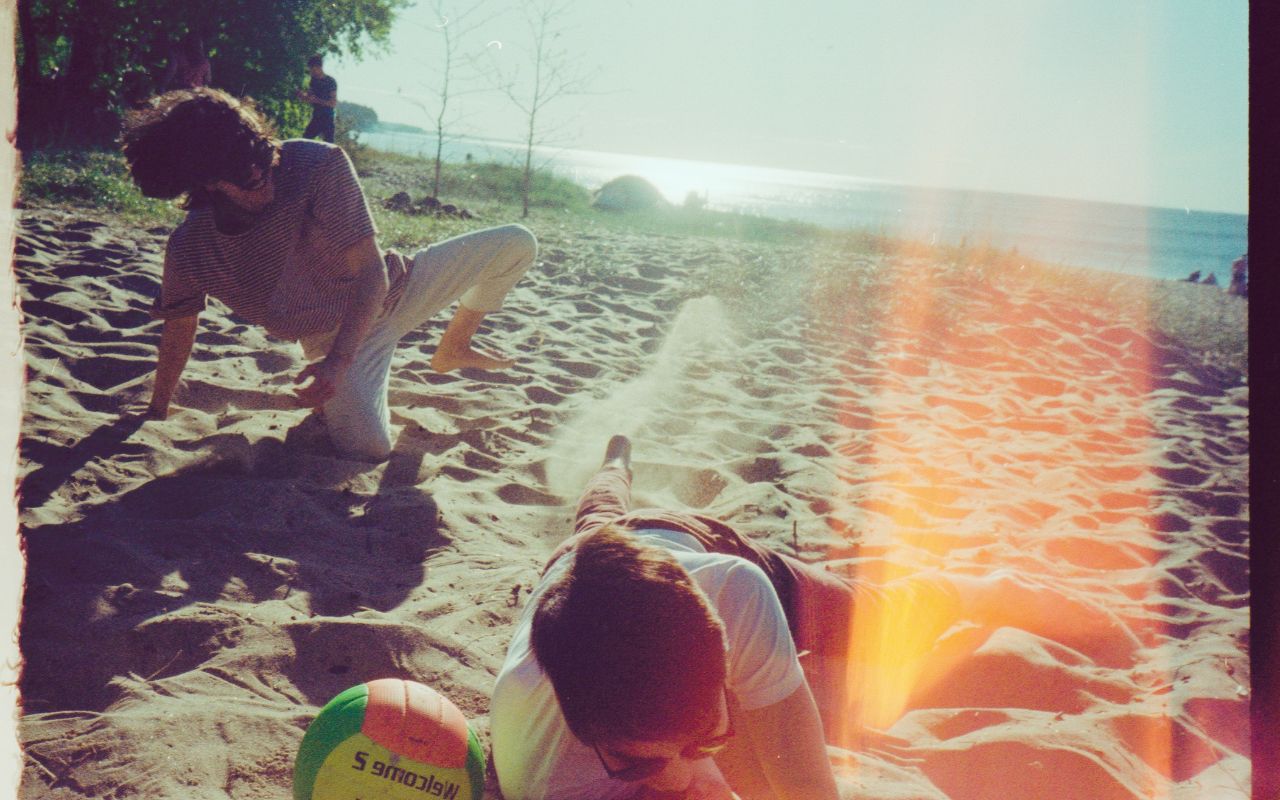
An open letter on reclaiming joy without purpose.
There are some questions that become strangely difficult as we get older.
One of them is this: What do you do simply because it's fun?
Not because it's productive. Not because it's good for your career or your fitness. Not because someone else expects it of you. Simply because you enjoy it.
For many adults, the answer takes longer than expected.
Somewhere between childhood and adulthood, we begin to treat enjoyment as something that must be earned. We work hard before we rest. We exercise because we know we should. We book holidays to recover from lives that have become increasingly efficient, organised and full. Every hour seems to have a purpose, every activity an outcome.
Play doesn't fit easily into that world.
It refuses to justify itself. It has no measurable return, no obvious destination and no interest in being optimised. It exists entirely in the present, which is perhaps why children are so naturally drawn to it. They don't ask whether climbing a tree is useful or whether running through a field is helping them become better versions of themselves. They simply respond to the world with curiosity.
As adults, we often lose that instinct. We replace curiosity with competence and spontaneity with routine. We become so focused on doing things well that we stop doing things badly, and in doing so we quietly abandon one of the most enjoyable parts of being human. We forget what it feels like to learn without pressure, to laugh without self-consciousness or to become completely absorbed in something with no thought for what comes next.
Yet the moments that stay with us rarely have anything to do with productivity.
They're the evenings that ran later than planned because the conversation was too good to leave. The swim that turned into an impromptu race. The game that nobody wanted to end. The path that looked interesting enough to explore, even though it wasn't the quickest way home.
None of those moments were efficient.
All of them were alive.
Perhaps this is why play matters so much. It reminds us that life isn't something to be completed as efficiently as possible. It is something to be experienced. Play interrupts the constant instinct to measure and evaluate ourselves. It allows us to become beginners again, to be surprised, to take ourselves a little less seriously and to remember that enjoyment is not a distraction from life but one of its essential ingredients.
At Wildfitness, we don't think of play as a break from wellbeing. We think it is part of wellbeing. It's there when someone decides to jump into the sea before breakfast. It's there when a walk becomes an adventure because nobody is in a hurry to reach the destination. It's there in the laughter that arrives unexpectedly around a campfire, or in the simple satisfaction of trying something for the first time without worrying whether you're any good at it.
These moments are easy to dismiss because they seem so ordinary. But they have a remarkable way of changing how we feel. We leave them lighter than we arrived, not because anything extraordinary has happened, but because we've stopped trying to control every part of the experience.
Modern life asks us to be capable, organised and constantly improving. Those things have their place. But there is another side of being human that deserves just as much attention. The side that is playful, curious and willing to wander without needing to know exactly where it is going.
We don't stop playing because we grow older.
More often, we grow older because we stop playing.
Perhaps the invitation is not to become more childlike, but to become more fully ourselves. To remember that joy doesn't need a purpose, that curiosity is a form of wisdom, and that a life with room for play is often a life that feels richer in every other way.
What does play look like for adults?
Adult play is any absorbing activity chosen for enjoyment rather than productivity. It may be a game, an improvised challenge, a cold-water swim, dancing, climbing, making something or following curiosity with no useful outcome required. The form matters less than the qualities it creates: attention, freedom, experimentation and a willingness to be slightly unserious.
Research into adult playfulness is still developing, but an exploratory study of adult playfulness and wellbeing found positive relationships with emotion, engagement, relationships, meaning and overall wellbeing. This is an association, not a promise that play will treat a health condition.
How to make room for more play
- Choose an activity with no score, target or performance data.
- Do something familiar in an unfamiliar setting.
- Invite another person; shared play lowers the pressure to be good at it.
- Stop while it still feels enjoyable, so the activity remains easy to return to.
For the evidence and the wider wellbeing context, read the importance of play in adult wellbeing. For a movement-led perspective, see movement vs exercise.