
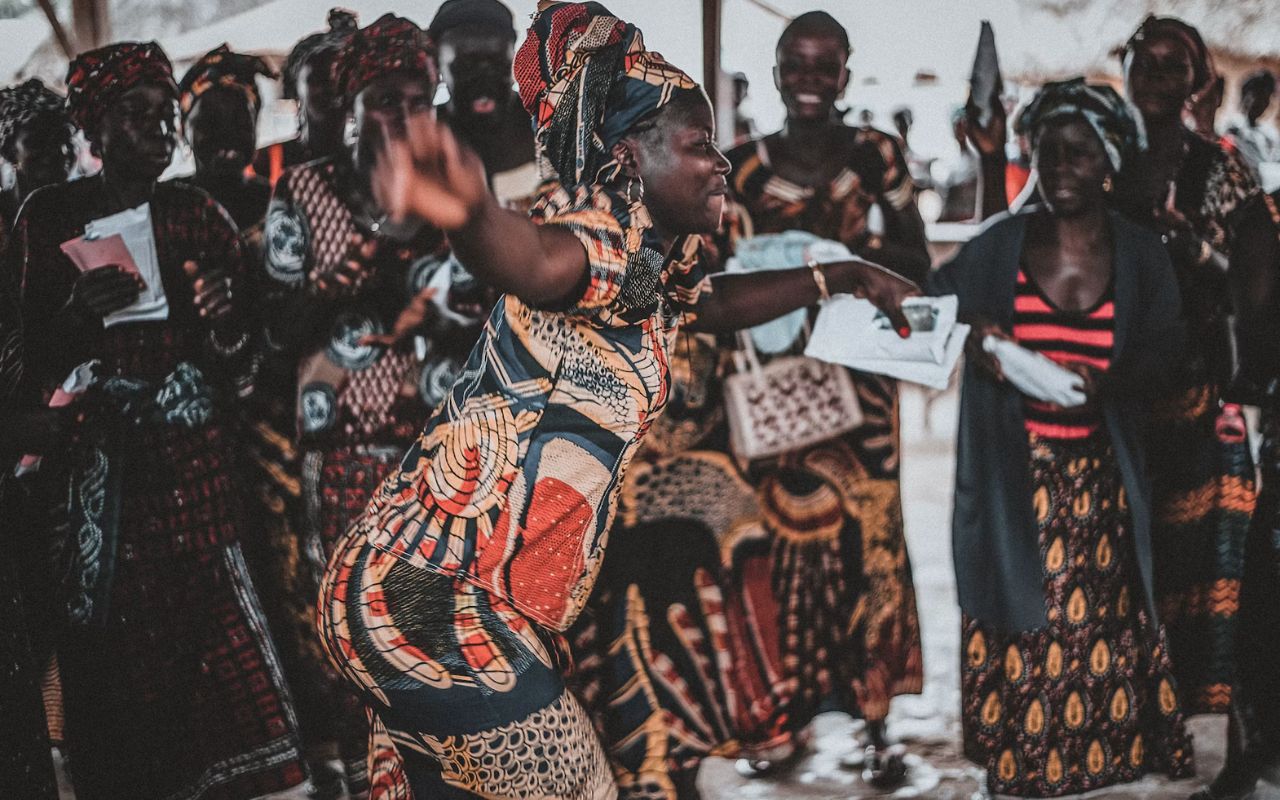
A short story on the power of shared experience.
Most of us don’t notice the absence of community at first. Life is still full of people. We pass colleagues in corridors, exchange messages with friends, sit near strangers on trains, speak to shopkeepers and neighbours in small fragments throughout the day. On the surface, nothing feels missing.
And yet something has changed in the way we experience those interactions. They are often brief, functional and slightly weightless. We can move through an entire day surrounded by others without ever feeling truly connected to any of them.
It is possible to live socially, but not feel part of anything.
There was a time when this distinction barely existed. For most of human history, life was organised around groups that were small enough for everyone to know each other. Work, food, movement, celebration and rest were shared activities rather than individual ones. You did not simply exist alongside others; you participated in their lives and they in yours.
In that context, belonging was not something you had to find. It was something you were already in.
Modern life has changed the structure of that experience. We are more mobile, more independent and more connected in a technical sense than at any point in history. But connection itself has become more fragmented. We can choose who we speak to, when we speak to them and how deeply we engage, which has many advantages, but it also means that sustained, unchosen togetherness has become rare.
We have replaced shared time with scheduled contact.
There is a subtle difference between being around people and being with them. Being around people is common. Offices, cities, gyms and public spaces provide constant proximity to others. Being with people is something else entirely. It involves continuity, familiarity and a sense that your presence and theirs are part of the same ongoing experience.
Without that continuity, something important begins to fade. We start to relate to life as individuals moving in parallel rather than as participants in something shared. Even our achievements and challenges become private experiences, processed internally or shared later in summary rather than lived collectively in real time.
This matters more than it might seem. Human beings are not only individual thinkers and doers. We are also relational. Our sense of self is shaped, in part, by the people we spend time with and the environments we return to again and again. When those relationships are thin or temporary, we lose some of the feedback that helps us feel grounded in who we are.
Belonging changes that.
It creates a different kind of attention. When you feel part of a group, you begin to notice others more easily. You adjust without thinking. You contribute without needing recognition. There is less self-monitoring and more shared awareness. Even simple activities take on a different quality when they are experienced together rather than alone.
A walk feels different when it is walked with others.
A meal feels different when it is prepared and eaten together.
Even silence feels different when it is shared.
At Wildfitness, we see this repeatedly. People often arrive expecting to focus on their own experience—on movement, on rest, on time away from routine. But what tends to stand out most is not individual achievement. It is the experience of being part of a group that is living through the same days together. Early morning swims, long walks, shared meals, tired laughter at the end of the day. These moments accumulate into something that feels quietly significant.
Not because anything is engineered.
But because it is shared.
By the end of a retreat, people rarely describe only what they did. They talk about who they did it with. The encouragement they received. The conversations that unfolded unexpectedly. The sense that, for a short period of time, life had become simpler because it was no longer carried alone.
Perhaps that is what we mean when we talk about community.
Not a network.
Not a group.
But a feeling of being held, however lightly, by something beyond yourself.
And when that feeling is present, even briefly, it has a way of changing how you move through the world afterwards.
Why community matters to wellbeing
Community gives everyday life a sense of belonging and reciprocity. It creates people to move with, eat with, learn from and return to. Strong connection does not require constant sociability; it can be as simple as knowing that we are seen, useful and able to ask for help.
The US Surgeon General’s advisory on social connection describes social connection as an important influence on health. The quality of a relationship matters more than the number of contacts, which is why shared attention and unhurried time often feel different from a crowded calendar.
What belonging looks like in practice
- Shared purpose: doing something together gives conversation a natural starting point.
- Repeated contact: familiarity grows through ordinary, consistent encounters.
- Mutual contribution: people feel part of a group when they can both give and receive.
- Space for difference: belonging does not require everyone to be the same.
Why retreats can make connection easier
A small retreat group removes many of the roles and routines that usually define us. Movement, meals and time outside create common ground quickly, while rest leaves room for connection to form without being forced. Read more about wellness retreats for small groups and joining a wellness retreat as a solo traveller.